Technical trading tools help traders look at past prices and spot patterns that might repeat, making it easier to read markets such as foreign exchange, stocks, index funds, commodities, and even popular cryptocurrencies.
By turning price data into charts, indicators, and clear numbers, these tools offer views on trend strength, market quiet times, and sudden price jumps, all of which support smarter buy and sell choices.
This post gives an easy-to-understand rundown of the main technical tools, how they work, and where people use them, all while staying within the rules set by trading authorities.
What Are Technical Trading Tools?
Technical trading tools are chart features, show-on-the-screen indicators, and quick-study reports that let traders see and think about market facts side by side.
Most online broker platforms utilize these tools, starting with simple line graphs and stretching to extra-handy blinking bars, so every kind of trader-from cautious beginner to fast-moving scalper-can pick what fits best.
Built to show both old and live price action, the tools let users watch crowd behavior without ever telling them exactly when to buy or sell.
Types of Technical Trading Tools
People who study charts lean on several different gadgets, each one aimed at a special piece of the pricing picture.
Charting Tools
Price charts sit at the heart of the whole trading story because they lay out movement over chosen time frames.
A few chart shapes that pop up on most screens are:
- Line Charts: Connect closing prices with a simple line, making long-term trends easy to follow at a glance and hiding daily noise.
- Bar Charts: Draw vertical bars that mark open, high, low, and close for each period, showing range and strength without extra symbols.
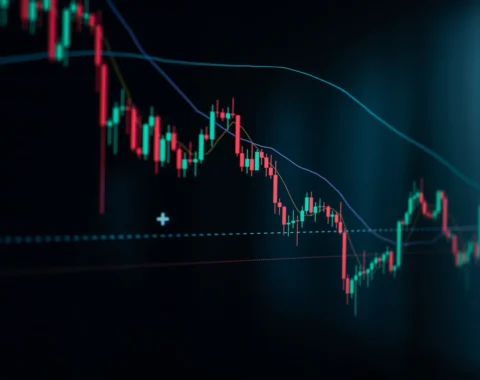
- Candlestick Charts: Use colorful boxes to reveal open, high, low, and close prices in one graphic, spotlighting quick-reading signals like pin bars or engulfing candles.
Charts
- Line Charts: Use a simple line that joins closing prices, so traders can quickly spot whether an asset is moving up or down over time.
- Bar Charts: Like candlesticks, bars show opening, high, low, and closing prices, but they highlight the range rather than the finer pattern details.
Most trading platforms let users pull up these charts for pairs like EUR/USD or gold on daily, hourly, or even minute timeframes, making trend and price level checks fast and easy.
Technical Indicators
Indicators are math formulas that sift through price data and spit out market clues.
Three crowd-favorites are:
- Moving Averages: Lines that smooth jagged price spikes; the 50-day simple moving average, for example, hints at long-range direction.
- Relative Strength Index (RSI): A number between 0 and 100 that shows momentum- over 70 usually means a market may be overbought, below 30 often means it may be oversold.
- Bollinger Bands: Two outer lines that sit around the price; when the bands squeeze together, traders read that as low volatility, and when they stretch apart, they see rising volatility.
Although these tools offer different angles on momentum, volatility, and possible trend turns, they never tell a trader exactly what to buy or sell.
Applications of Technical Tools Across Markets
- Forex Market Applications
In forex trading, charts and indicators are everyday buddies. Many people watch candlestick charts or the Relative Strength Index (RSI) to see how pairs like GBP/JPY act.
A typical setup might pull up a 4-hour chart to hunt for a double top, then glance at the MACD when London’s busy overlap with New York, usually between 8 AM and noon EST. Over those busy hours, those indicators reveal small but telling shifts in price.
- Stock and Index Applications
When people trade stocks like Tesla or index funds that shadow the NASDAQ, they rely on similar tools to catch fresh trends sparked by earnings or big sector headlines.
Open-high-low-close bar charts expose sudden price gaps, and moving averages brighten the general drift, whether it’s upward or downward.
Traders often add volume lines to this mix; those lines show how many shares or contracts really moved and help explain why prices jumped.
- Cryptocurrency and Commodity Applications
Markets like Bitcoin or crude oil can lurch violently in minutes, so analysts often reach for Bollinger Bands-Wide bands mean calm, tight bands spell chaos.
On a quick 15-minute chart, colored candlesticks mark those rapid lifts or drops, and the Average True Range (ATR) weighs how far a price usually travels each hour, giving a rough guide to possible next moves that news headlines and supply-demand bumps might trigger.
Functions of Technical Trading Tools
Whether on a smartphone, laptop, or dedicated terminal, all these indicators do a short list of chores. For example, Data Visualization Charts hold decades of history and feed every tick line up in real time, so traders can grasp the story at a quick glance.
- How Technical Tools Help Trader Decisions
Modern charting software makes it easy to spot classic patterns such as triangles and head-and-shoulders. By highlighting these formations, traders quickly see how other market players might be feeling right now.
TSI or ATR shows whether prices are moving strongly or just drifting. Knowing if momentum is high or low helps analysts decide whether to chase a trade or wait for clearer signals.
Together, these features let users watch stocks, forex, or crypto across daily, hourly, and even minute charts without missing important changes.
- Keep This in Mind When You Chart
Even the best screens from a brokerfeed can break or lag during news. If candlesticks freeze or jump, every indicator that looks backward is worthless. Pair reliable data with alerts so you never stare blindly at stale prices.
Another common mistake is loading five or more signals onto one graph. Too many colors and lines hide, rather than reveal, clarity. Start with two or three trusted reads and add more only after you understand what each one really shows.
Finally, remember that every line on your chart traces history, not prophecy. Use indicators to sharpen your gut feeling, but never let them replace it.
- What Charts Can’t Tell You
Because technical tools explain only what has already happened, traders still face surprises. A thin market can flash a long green candle, fooling scalpers into premature buys. With fewer orders sitting at every price, lows can sweep through stops before reversing.
Execution speed matters too. The same RSI reading may look great on one platform and terrible on another, simply because fills take a fraction longer.
Add widening spreads during news, and profits can disappear before your order even hits the book. Stay aware of your broker’s mechanics, especially when using zero-latency scalping methods.
Exploring Technical Tools Effectively
Knowing how to use technical trading tools helps you read and react to market trends with confidence. When you dive into chart types like candles, lines, or bars-and-test indicators like RSI or MACD-you start to spot repeating price behavior around the globe.
Conclusion:
Technical charts and signals act like a guided tour through the price action, showing you where buyers and sellers press hard. Once you grasp what each tool does and when to pull it out, you trade with a clearer plan and less guesswork.
Frequently Asked Questions
1. What are technical trading tools?
Technical trading tools include indicators, charting features, and analysis tools that help traders interpret price movement.
2. Which tools are commonly used in technical analysis?
Common tools include moving averages, support and resistance levels, oscillators, and trend indicators.
3. Are technical tools suitable for beginners?
Many technical tools are beginner-friendly and can help traders understand market structure and price behavior.
4. Do traders rely only on technical tools?
Some traders combine technical tools with other analysis methods, such as fundamental analysis or market news.